
Organic Luxe: The 2026 Design Trend Every Luxury Homeowner Is Asking About
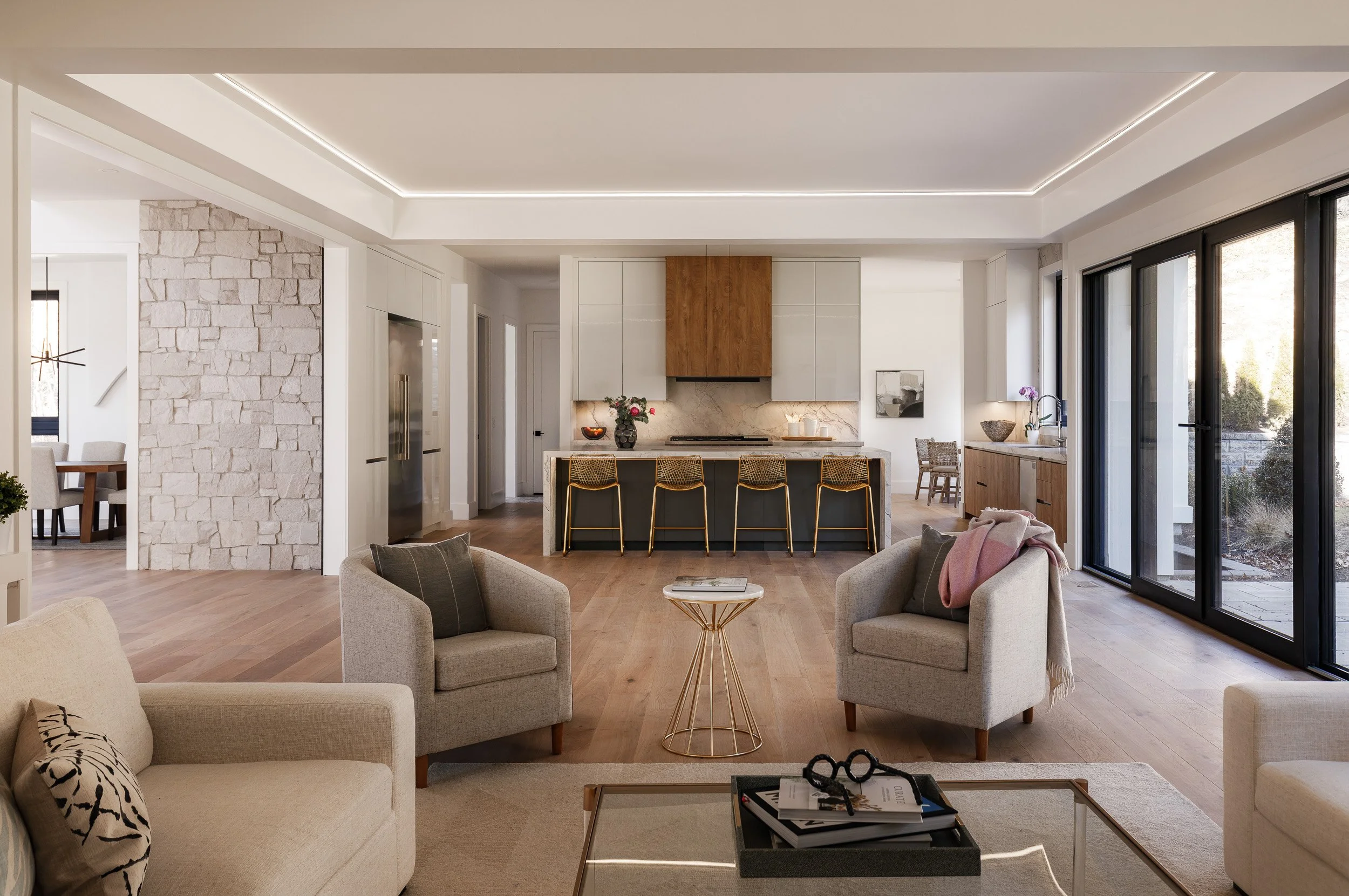
A warm modern transitional kitchen with natural stone, walnut accents, and light-filled open-concept living.
There is a shift happening in luxury interior design right now, and it is one of the most welcome ones we have seen in years. After a long stretch of cool, stark, almost clinical minimalism, high-end homes are getting warmer, literally and emotionally. Designers are calling it Organic Luxe, and it is quickly becoming the defining aesthetic of 2026.
At DFI Interiors, we have spent our careers designing multi-million dollar residences with one guiding belief: a home should feel as beautiful as it looks, and as personal as it is polished. So when a trend comes along that finally puts warmth, texture, and soul back at the center of luxury design, we pay attention. This is the trend report we would give a client sitting across from us at our design table — the real substance behind the mood boards, including what it costs, how long it takes, and how to do it without regret.
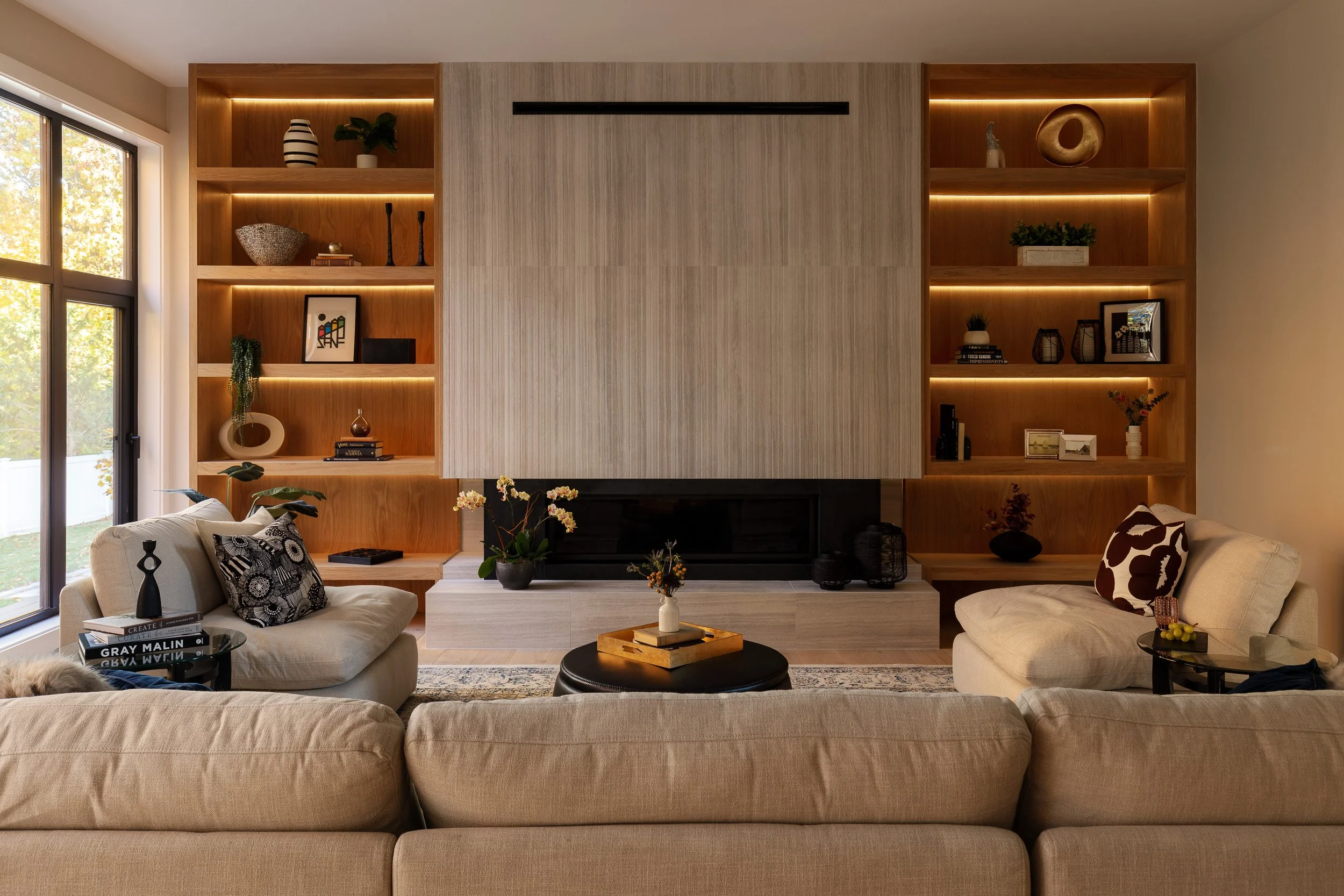
Warm modern living room with custom white oak built-ins, integrated LED lighting, a contemporary fireplace, and layered neutral furnishings.
What "Organic Luxe" Actually Means
Organic Luxe is the marriage of two ideas that used to feel at odds: refined luxury and lived-in warmth. Instead of glossy, hard-edged minimalism, think sculptural curved sofas, rounded kitchen islands, arched doorways, and softly finished millwork, textured tiles that guides the eye through a room rather than cutting it into sharp lines.
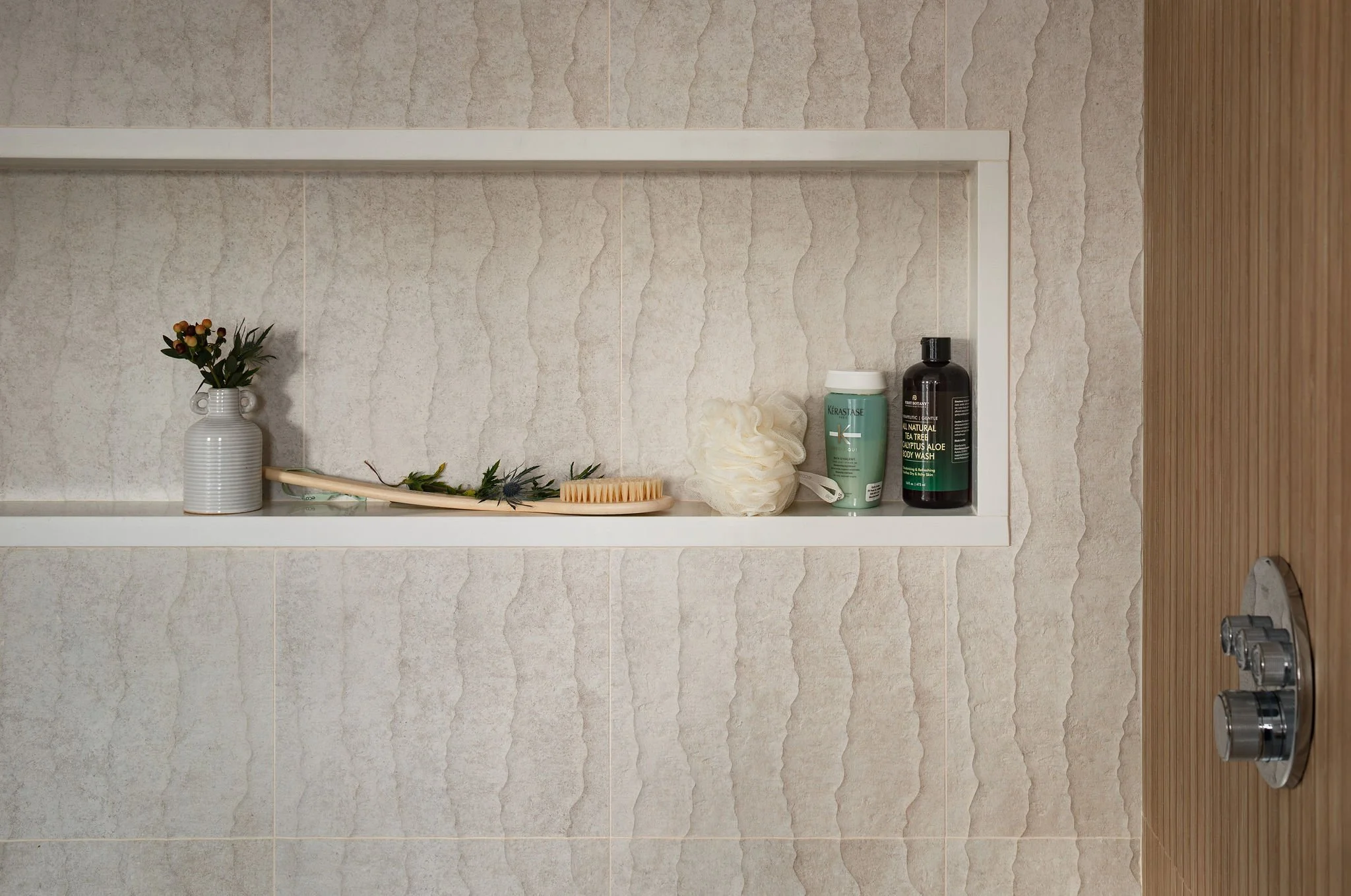
Spa-inspired walk-in shower featuring textured natural stone tile, a floating recessed niche, warm wood accents, and minimalist modern finishes.
It sits alongside a closely related movement, Modern Heritage, which blends timeless architectural details, classic moldings, traditional paneling, hand-finished trim, with contemporary furnishings and updated palettes. Together, these two movements are why 2026 interiors feel less like showrooms and more like homes with real provenance.
This is, frankly, the design language DFI Interiors has always spoken. Our aesthetic has long lived in the space between modern, contemporary, and transitional, and our European sensibility has always favored clean architecture layered with warmth, color, and texture rather than austerity. What the industry is calling a "trend," we would call a return to timeless good taste.
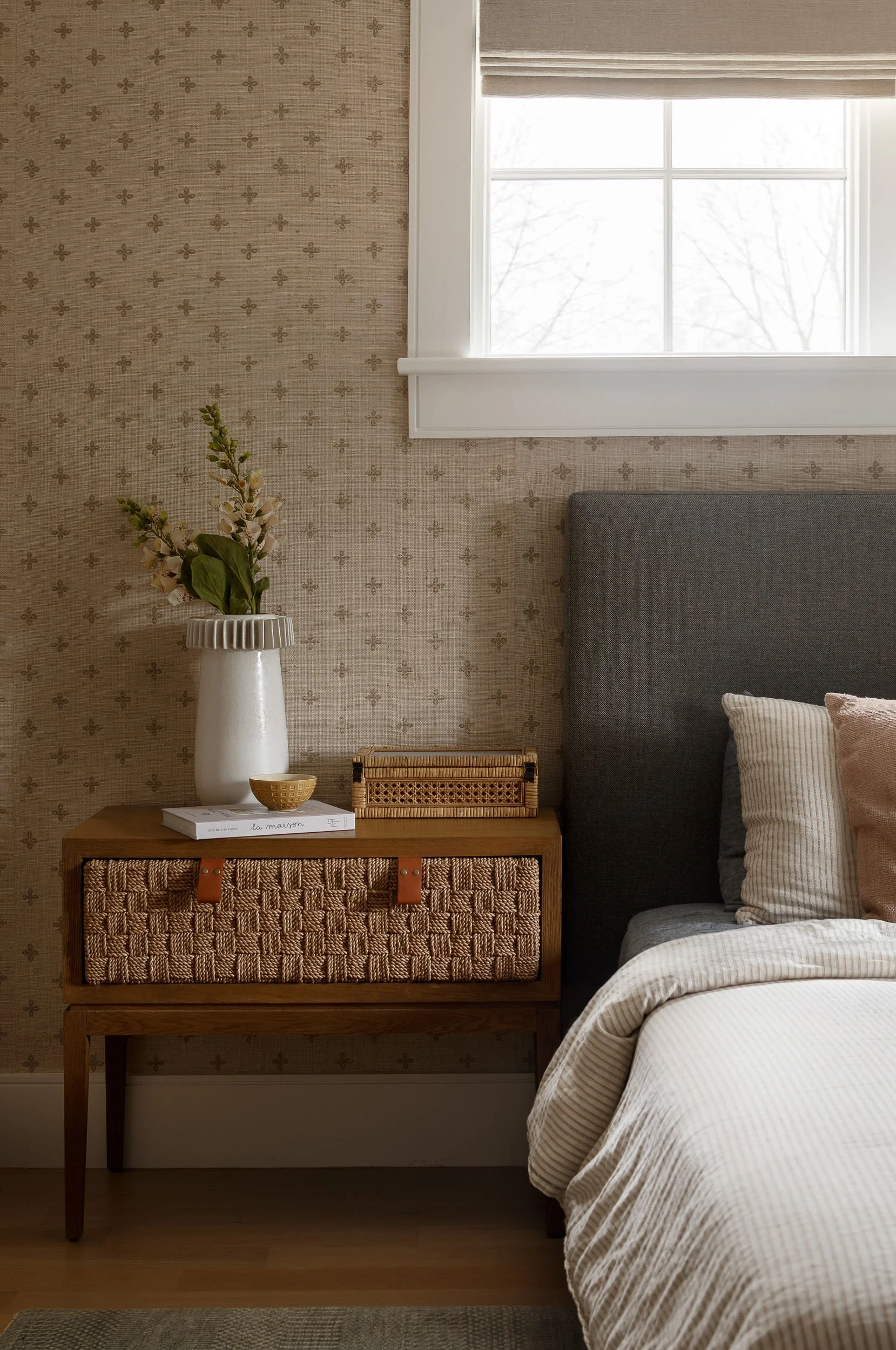
Cozy bedroom vignette featuring patterned grasscloth wallpaper, warm wood furniture, woven storage, and layered neutral textiles for timeless texture and warmth.
The Palette: Warm Neutrals Are the New Luxury Standard
Cool gray is stepping aside. In its place: chocolate, mahogany, caramel, saddle, and cocoa tones are anchoring high-end interiors, while stark white is softening into creamy ivories, warm plaster, and linen. Designers are also layering in confident depth through jewel tones, deep terracotta, chocolate brown, ruddy reds, and a much-discussed "transformative teal" as an accent against those warm neutral bases.
The most sophisticated rooms we are seeing this year do not play it safe with a single mood. They pair warm and cool deliberately: a dusty blush wall against deep navy trim, mustard-toned doors against plum walls, warm ceilings over slate cabinetry. It is a more confident, more personal way to use color, and it rewards a designer's eye for balance far more than a "one palette, one room" approach ever did.
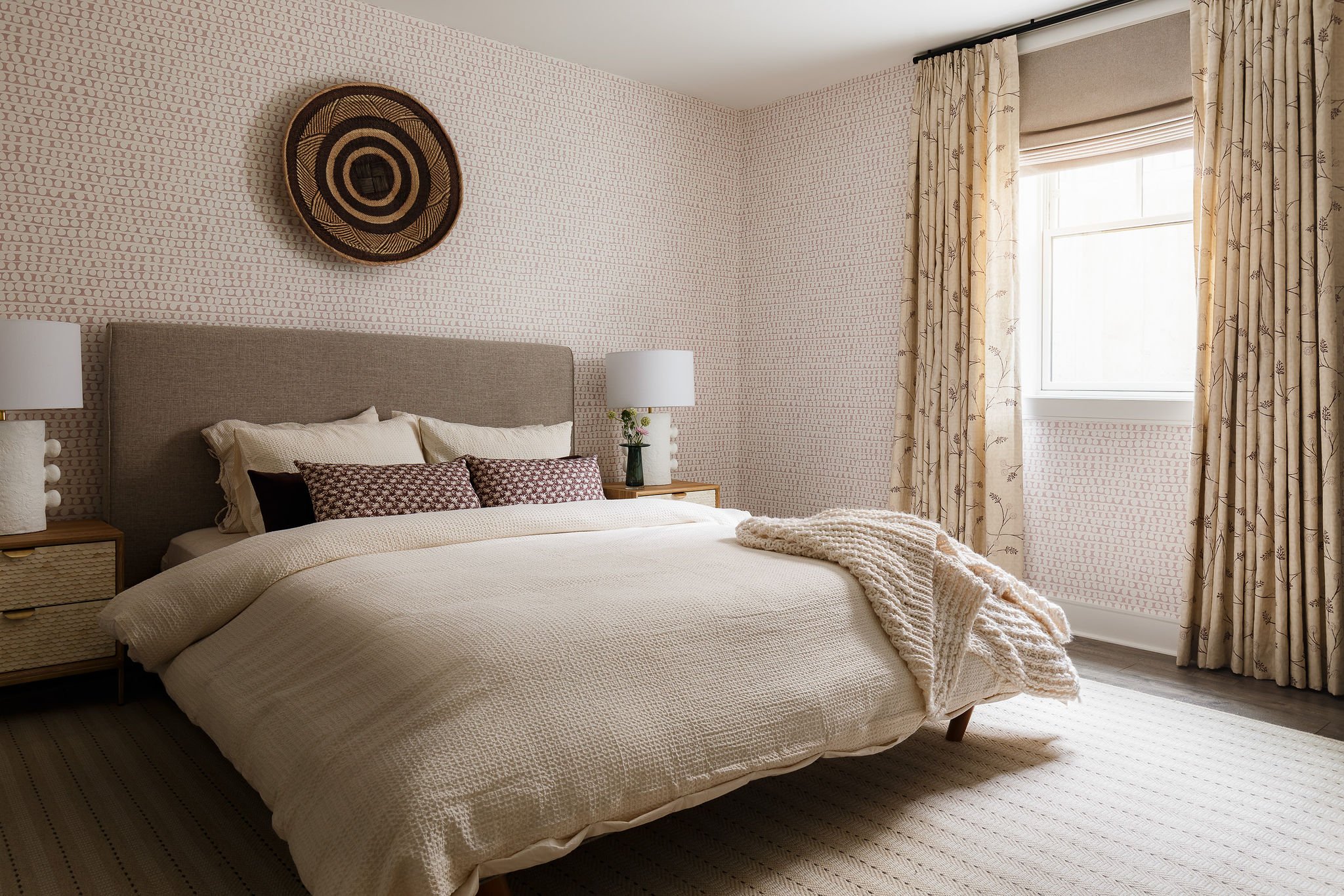
Inviting bedroom with patterned wallpaper, layered neutral bedding, tailored drapery, and warm natural textures for a timeless, cozy retreat.
Materials With a Story
This trend is also a material story. Reclaimed wood, richly grained timber, natural fibers, and stone with dramatic veining are replacing uniform, engineered surfaces. Mid tone woods have become what we like to call the "safe luxury" choice this year. Warm enough to feel inviting, refined enough to feel intentional. Herringbone remains the pattern our clients request more than any other, adding movement without overwhelming a room.
The nuance most homeowners do not hear about: finish performance now matters just as much as finish beauty. Clients want surfaces that look organic and untouched but perform like modern engineered systems, resistant to moisture, wear, and the realities of daily family life. Specifying that balance correctly is exactly where an experienced design team earns its keep.
Wellness is also woven into this trend at the architectural level, not just the decor level. Steam showers, saunas, curbless entries, and aging-in-place details are now standard asks in luxury primary suites, reflecting a broader shift toward homes designed for how people actually want to feel, not just how a room photographs.
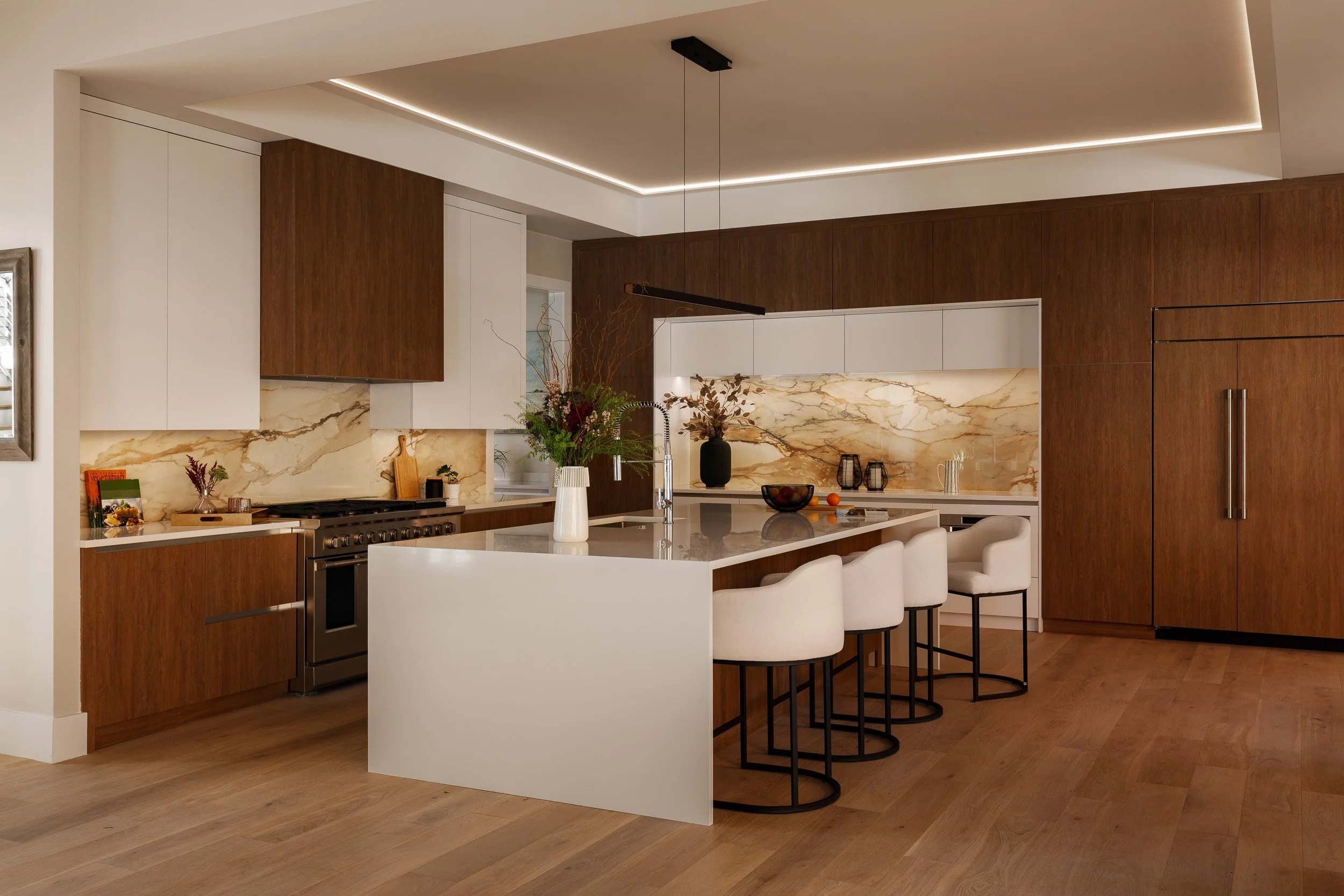
Modern walnut and white kitchen featuring a waterfall island, dramatic marble backsplash, integrated lighting, and warm contemporary finishes.
Why This Trend Rewards an Expert Guide
Organic Luxe is, in practice, one of the more intricate looks to execute well — and that complexity is exactly where an experienced design partner earns their place at the table.
Much of what makes this aesthetic feel so rich is also what makes it demanding to source: reclaimed timber, hand-finished millwork, artisan upholstery, and dramatically veined stone are not off-the-shelf goods. In-stock furniture might ship in a matter of weeks, but the custom, bespoke pieces that give Organic Luxe its authenticity, a hand-woven textile from a European atelier, a made-to-order sofa in exactly the right curve and fabric, are produced to order, often by small workshops with long-standing order books. Layer in construction milestones, permitting timelines, and the realities of coordinating multiple trades and vendors, and it becomes clear why the most beautiful executions of this trend are rarely improvised. They are the product of careful sequencing, decided months in advance, by someone who has done this before.
This is exactly the kind of orchestration we specialize in: knowing which vendors to trust, which finishes perform as beautifully as they photograph, how to sequence sourcing against your construction calendar so nothing holds up your move-in date, and how to make dozens of interdependent decisions feel effortless from where you're sitting. A trend this rewarding should never feel overwhelming to bring home — that is precisely what a design partner is for.
How to Bring Organic Luxe Into Your Home Without Overdoing It
The most common misstep we see is treating a trend as a checklist rather than a point of view. A few principles we hold onto with every client:
Let architecture lead the palette, not the other way around. Warm tones and curved forms should respond to your home's existing bones, its light, its proportions, its region, rather than being applied uniformly from a mood board.
Mix one bold, characterful material with several quiet ones. A dramatically veined stone island or a single statement wallpaper wall reads as intentional; five competing statement moments read as noise.
Resist rushing the sourcing. The pieces that make Organic Luxe feel authentic are reclaimed timber, hand-finished millwork, or artisan upholstery and are by nature, not quick. Building that lead time into your renovation calendar from the start is what separates a serene, on-schedule project from a stressful one.
Curate for how you live, not just how the room photographs. Wellness details, tactile materials, and softened forms matter because they change how a home feels day to day, long after the final photos are taken.
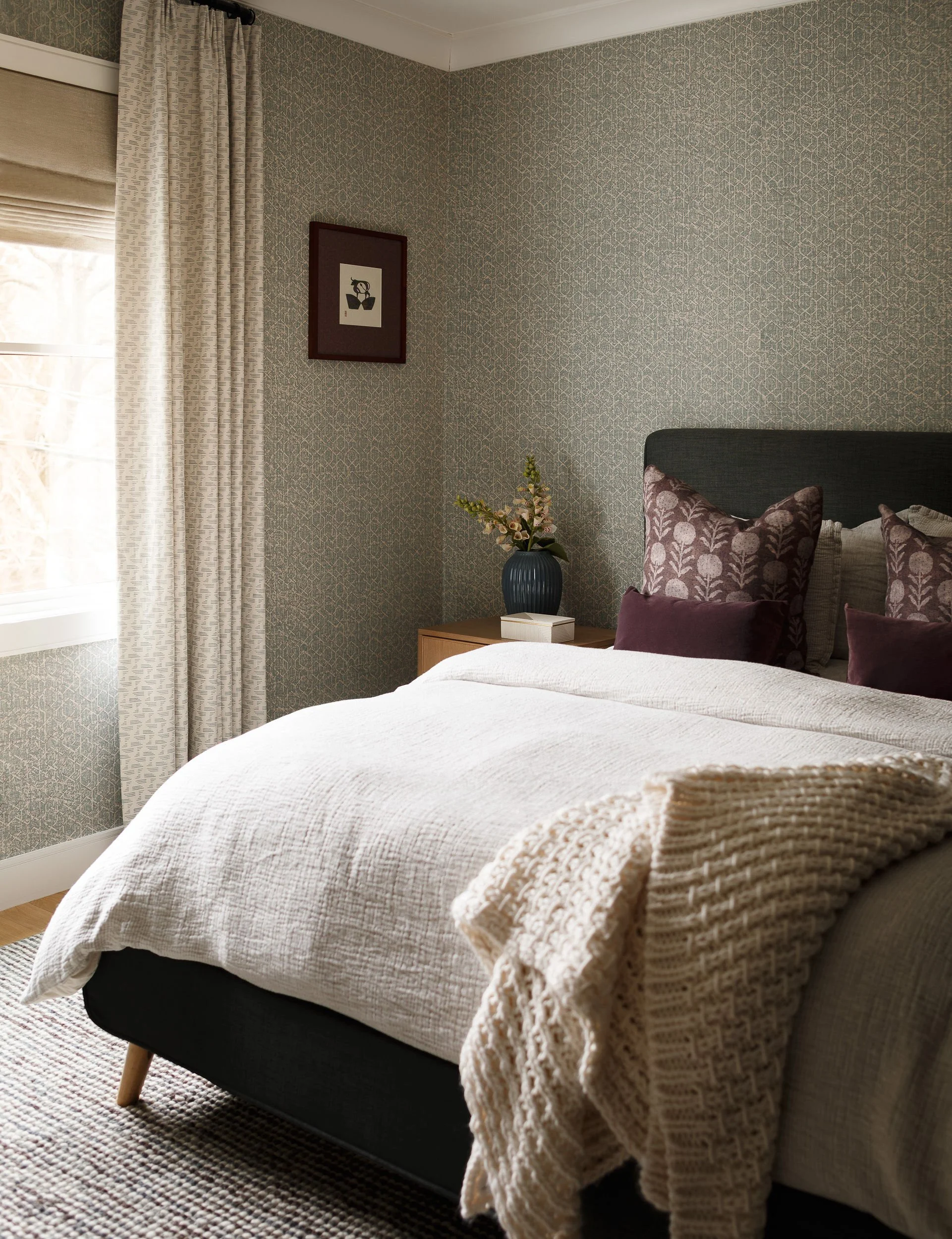
Elegant bedroom featuring geometric wallpaper, layered neutral bedding, tailored drapery, and rich plum accents for warmth and timeless sophistication.
How to Bring Organic Luxe Into Your Home Without Overdoing It
The most common misstep we see is treating a trend as a checklist rather than a point of view. A few principles we hold onto with every client:
Let architecture lead the palette, not the other way around. Warm tones and curved forms should respond to your home's existing bones — its light, its proportions, its region — rather than being applied uniformly from a moodboard.
Mix one bold, characterful material with several quiet ones. A dramatically veined stone island or a single statement wallpaper wall reads as intentional; five competing statement moments read as noise.
Resist rushing the sourcing. The pieces that make Organic Luxe feel authentic (reclaimed timber, hand-finished millwork, artisan upholstery) are, by nature, not quick. Building that lead time into your renovation calendar from the start is what separates a serene, on-schedule project from a stressful one.
Curate for how you live, not just how the room photographs. Wellness details, tactile materials, and softened forms matter because they change how a home feels day to day, long after the final photos are taken.
Our Take
This is, in many ways, a trend that simply confirms what we have believed all along: a home should be beautiful, but it should also feel like you. Organic Luxe rewards exactly the kind of considered, relationship-driven design process we practice with every client: full-scope design for a complete transformation, or a more focused, à la carte engagement (minimum ten hours) for a room, a refresh, or expert guidance on a project already underway.
If this is the direction your home is calling for, we would love to talk it through with you. And if you simply want a preview of the kind of trade-only, hand-sourced pieces that make this look possible, our online atelier is open to browse anytime.
Follow DFI Interiors on Houzz and Instagram for more design insight, project reveals, and a closer look at how we bring European-influenced warmth into every home we touch.
