
How Much Does an Interior Designer Cost in Boston? A 2026 Guide
A realistic guide to interior design fees, renovation budgets and furnishing costs in Greater Boston
Most People Ask the Wrong Question
“How much does an interior designer cost?”
It's usually one of the first questions homeowners ask and understandably so. Renovating or furnishing a home is a significant investment, and knowing what to budget is an important part of the planning process.
But after years of designing homes throughout Greater Boston, I've come to realize that it's rarely the right question.
A better one is:
“What am I actually paying for?”
Because interior design isn't simply about selecting beautiful furniture or choosing paint colors.
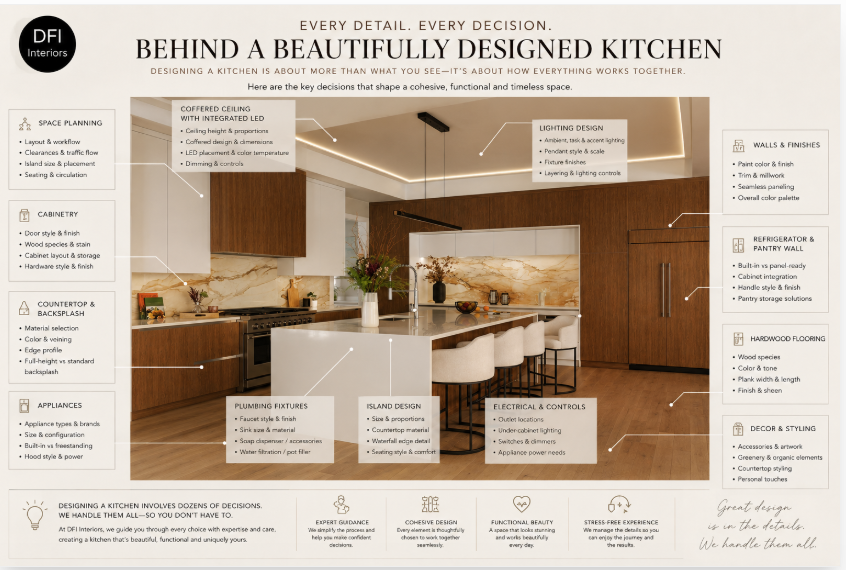
It's about making hundreds of interconnected decisions before they become expensive mistakes. It's deciding where lighting should go before the electrician closes the walls. It's noticing that a kitchen island is six inches too large before cabinetry is ordered. It's understanding how natural stone, wood tones and lighting will interact not just individually, but together, for years to come.
What you're really paying for is judgment: knowing which decisions matter, when they need to be made and how each one affects everything that comes after it.
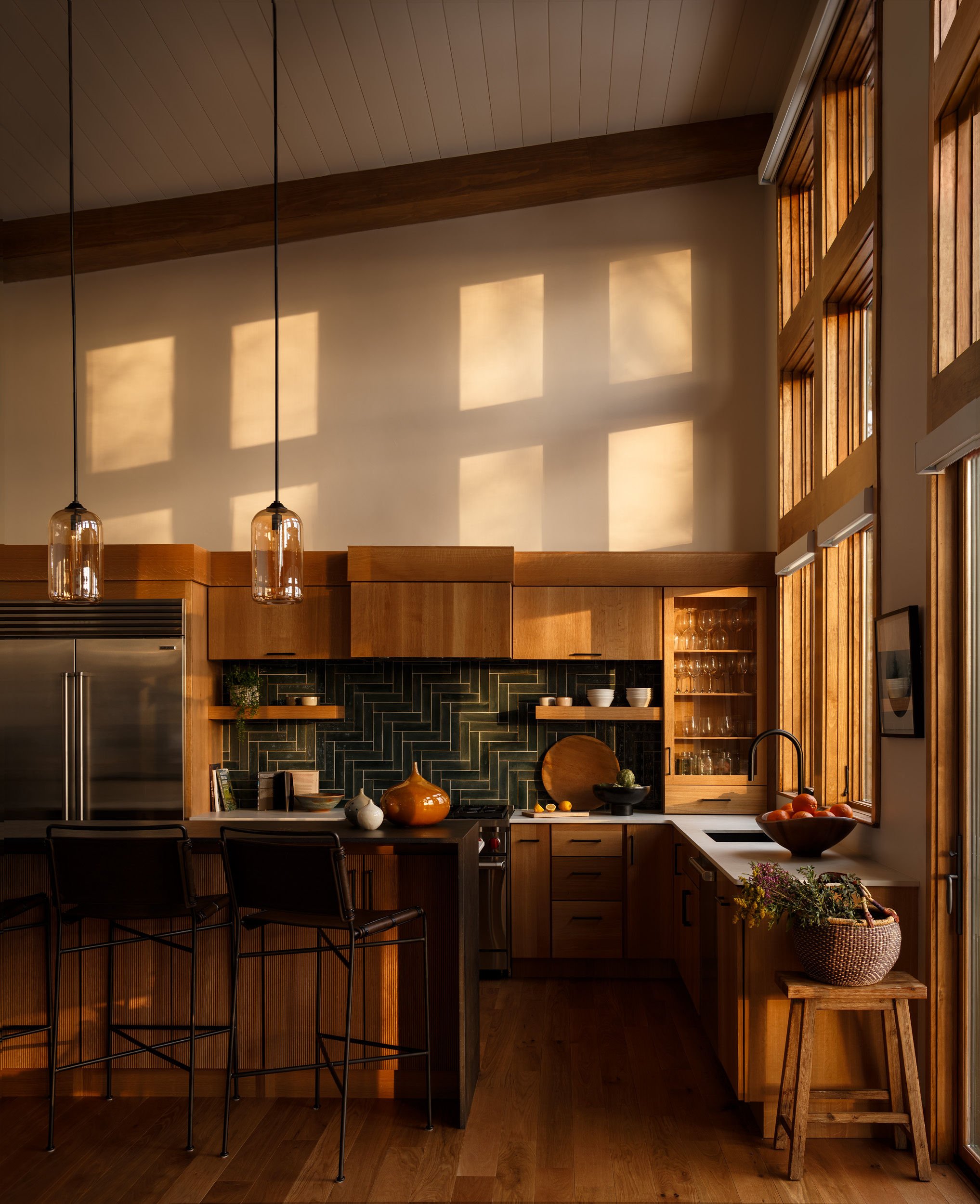
Kitchen Design for a DFI Interiors project in Lexington, Massachusetts.
When those decisions are made well, they almost disappear. The home feels comfortable. Balanced. Effortless.
When they're made poorly, homeowners often spend years wondering why a room never quite feels right.
That's why pricing interior design is difficult.
Helping a family select paint colors for their first floor is a very different service from managing a year-long renovation involving architects, builders, cabinetmakers, lighting plans, custom furniture and dozens of vendors. They simply aren't the same job.
This guide is designed to give you something more useful than a generic national average.
It will help you understand what interior design really costs in the Greater Boston market, what influences those costs and, perhaps most importantly, how to determine what level of investment makes sense for your own home.
Whether you're renovating a historic Colonial in Newton, furnishing a new home in Wellesley or updating a condominium in Boston, my hope is that you'll finish this article with realistic expectations and the confidence to make informed decisions.
How Much Does an Interior Designer Cost in Boston?
In the Greater Boston area, experienced residential interior designers typically charge $175 to $350 per hour, while principals at established firms often charge $300 to $500 per hour or more.
For larger projects, many designers work with flat fees or project-based pricing rather than hourly billing.
The design fee, however, is only one part of the overall project investment. For the types of full-service projects DFI Interiors typically works on, professionally furnishing a living room often requires an investment of $45,000 to $100,000+, while a kitchen renovation typically begins around $100,000 and can increase significantly depending on cabinetry, construction, materials and the level of customization.
These figures may sound higher than the national averages you'll find online. That's because Boston isn't an average market and that's exactly where many pricing guides fall short.
Why Does Interior Design Cost More in Boston?
One of the biggest mistakes homeowners make is using national averages to budget for a Boston renovation. They look perfectly reasonable on paper. Then reality arrives.
Boston has some of the oldest housing stock in the country. Many of the homes we work in were built long before modern kitchens, open floor plans or contemporary lifestyles existed. Walls aren't always square. Floors aren't always level. Hidden plumbing, aging electrical systems and decades of previous renovations can reveal surprises once construction begins.

Historic homes in Boston neighborhoods such as Beacon Hill can present renovation considerations that aren't reflected in national cost averages.
Boston renovations can also come with logistical challenges that national pricing guides rarely account for. Historic preservation requirements, limited site access, narrow streets, multi-story homes and original staircases can all add complexity to construction, delivery and installation.
Even newer homes present their own considerations. Families investing in communities such as Weston, Wellesley, Brookline and Concord are rarely looking for quick cosmetic updates. They're creating homes they expect to enjoy for decades. That changes the conversation.
The focus shifts from simply buying furniture to investing in craftsmanship, thoughtful planning and materials that will age beautifully over time.
It also changes how budgets are allocated. Instead of replacing one sofa, clients may be considering custom window treatments, properly scaled rugs, architectural lighting, millwork, bespoke cabinetry and furnishings selected specifically for the way their family lives.
Those investments naturally exceed the figures you'll see in generic online pricing guides. That doesn't mean they're excessive. It simply means they're designed for a different outcome.
Interior Design Isn't Expensive Because Furniture Is Expensive
Here's the biggest misconception I encounter: people often assume they're paying a designer to choose beautiful things.
They're not. They're paying for judgment.
Knowing when a floor plan works and when it doesn't. Knowing that a six-inch adjustment to a kitchen layout today can eliminate years of frustration. Knowing that a room doesn't feel comfortable because the furniture is too small, not because it needs more accessories. Knowing which products will still look beautiful ten years from now.
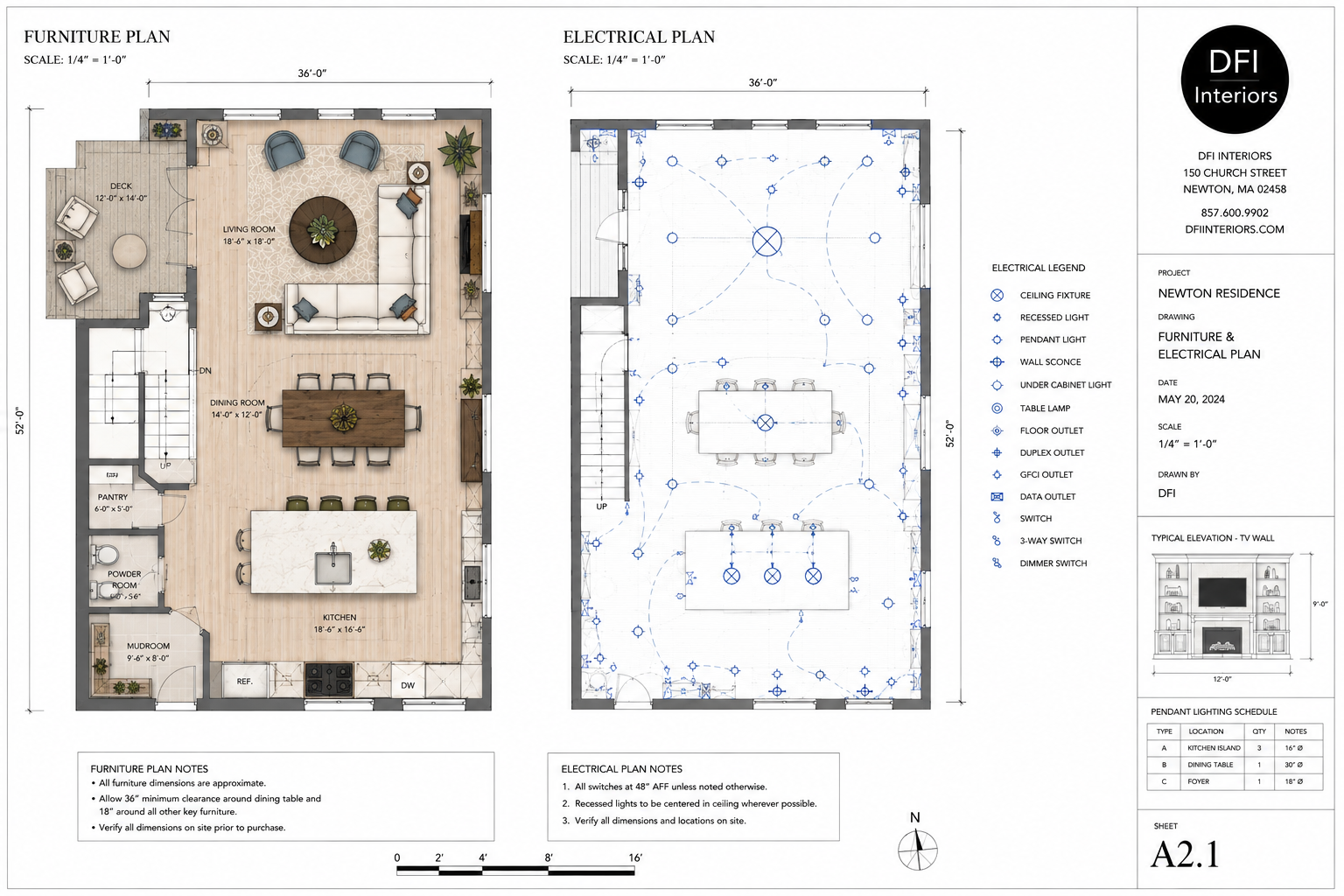
In a well-designed home, no decision stands alone. Lighting, furniture placement, and circulation must be considered together to create a space that is both beautiful and effortless to live in.
Experience isn't measured by how many fabrics someone has seen. It's measured by how many problems they've already solved.
I often tell clients that my job isn't simply to make hundreds of decisions for them. It's to help them make the right decisions before those choices become expensive to change.
That's a very different service. And ultimately, it's the one that brings the greatest value.
“Interior design isn’t expensive because furniture is expensive. It’s expensive because making hundreds of decisions correctly requires experience.”
How Interior Designers Charge
There is no single pricing model across the interior design industry. Different projects require different approaches, and most established firms use a combination of pricing structures depending on the scope of work.
Hourly Interior Design Fees
For consultations or smaller projects, hourly billing is often the most appropriate solution. It provides flexibility and allows homeowners to bring in professional guidance exactly where they need it, whether that's reviewing architectural plans, selecting finishes or planning furniture layouts.
Flat or Fixed Interior Design Fees
When the scope is clearly defined, many designers prefer a fixed design fee. Clients appreciate knowing the investment upfront, while designers can focus entirely on solving problems rather than tracking every hour.
Project-Based Fees and Procurement
Larger renovations and new construction projects frequently move toward project-based pricing because the designer remains involved throughout construction, procurement and installation. In these cases, the work extends far beyond design concepts and includes ongoing coordination with contractors, vendors, workrooms and installers as the project evolves.
Many firms also charge procurement or purchasing fees. While this sometimes surprises homeowners, professional procurement involves far more than placing furniture orders. Every item must be quoted, ordered, tracked, received and inspected, coordinated for delivery and, when necessary, repaired or replaced if it arrives damaged.
Managing that process is a significant part of full-service interior design and one of the reasons clients choose to work with a professional in the first place.
If you're curious about how trade pricing fits into this process, we've explained it in more detail in our blog post: how designer discounts and furniture procurement actually work.
What Are You Actually Paying an Interior Designer For?
When people imagine the work of an interior designer, they usually picture mood boards, fabric samples and beautiful furniture. Those things are certainly part of the process. But they're only the visible part.
Professional interior design is less about choosing beautiful pieces and more about making hundreds of interconnected decisions that shape how a home will function, feel and age over time.
By the time you walk into a completed room, most of the important work has already happened. The furniture simply becomes the visible result of countless decisions made months earlier.
That's why asking “How much does an interior designer cost?” is a little like asking “How much does an architect cost?”
You're not buying drawings. You're buying expertise.
Good Design Is Good Decision-Making
Every project begins with questions that have very little to do with furniture.
How does your family actually live? Do you entertain often? Are children or pets using the space every day? Do you need a quiet place to work from home? How much natural light does the room receive? How long do you plan to stay in the house?
The answers influence almost every design decision that follows.
A family with young children will likely need different upholstery than empty nesters. Someone who loves entertaining may benefit from a completely different furniture layout than someone whose evenings revolve around reading by the fireplace.
These decisions aren't decorative. They're functional.
And they're often the difference between a room that photographs beautifully and one that truly supports everyday life.
Design Is About Relationships, Not Individual Pieces
One of the biggest misconceptions I encounter is the idea that successful interiors are created by finding exceptional furniture.
In reality, beautiful homes rarely revolve around one spectacular piece. They're built through relationships, the relationship between the flooring and cabinetry, the dining table and chandelier, the architecture and furnishings, and natural light, artificial light and color throughout the day.
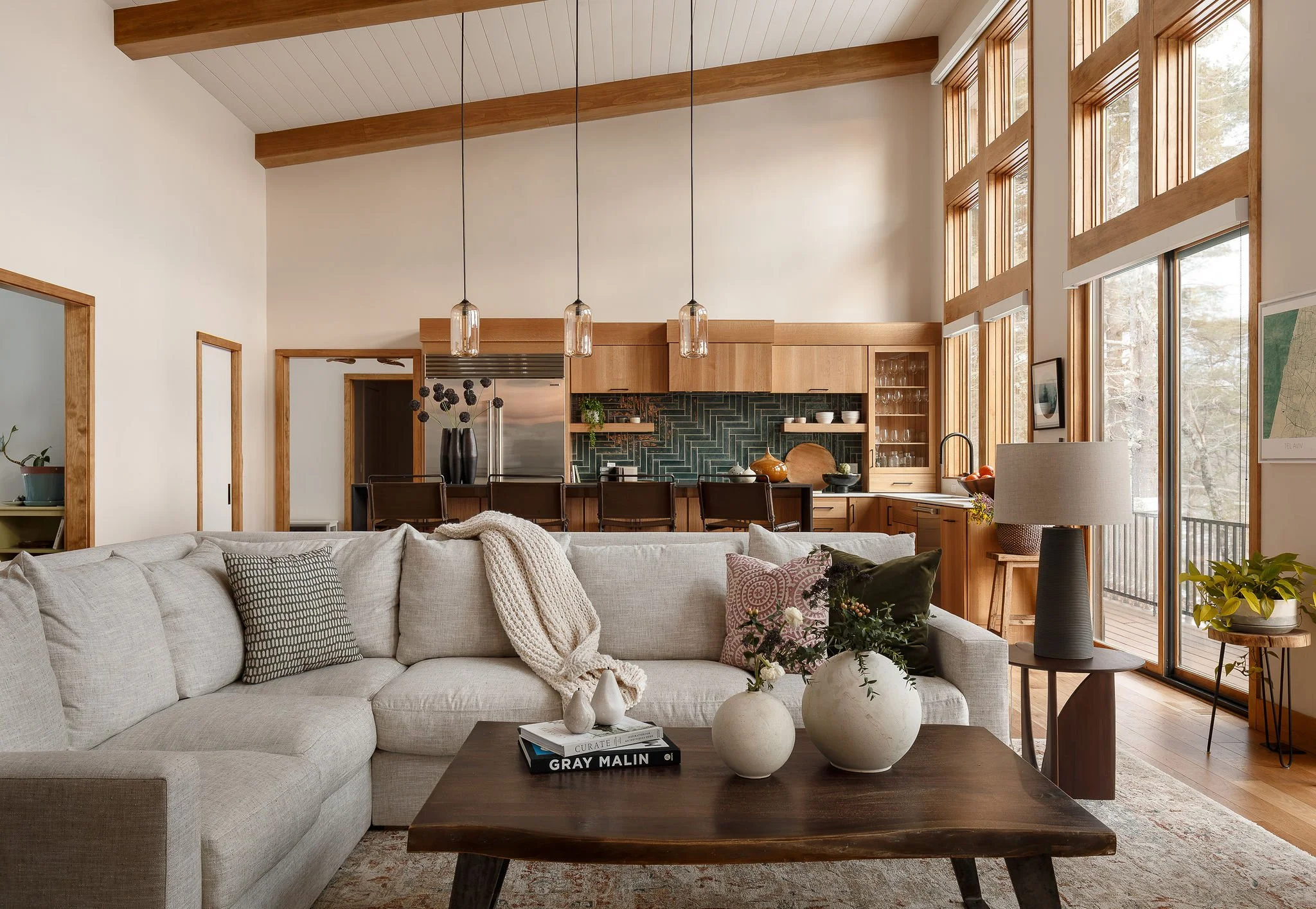
An open-concept kitchen and living space designed by DFI Interiors for a home in Wayland, Massachusetts.
A perfectly beautiful sofa can look completely out of place if it's the wrong scale.
An expensive rug can make a room feel smaller if it's undersized.
Even a stunning kitchen can feel uncomfortable if the lighting wasn't planned correctly before construction began.
The goal of interior design isn't to collect beautiful objects. It's to make every decision support the next.
“The homes people remember aren’t filled with expensive furniture. They’re filled with thoughtful decisions.”
The Work Most Homeowners Never See
Perhaps the biggest surprise for new clients is how much of our work happens behind the Perhaps the biggest surprise for new clients is how much of our work happens behind the scenes.
By the time a proposal reaches your inbox, hours may already have been spent researching manufacturers, requesting quotations, confirming dimensions, reviewing lead times and ensuring products work together both aesthetically and technically.
Once selections are approved, another phase begins. Orders are placed. Production is monitored. Finish samples are reviewed. Delivery schedules are coordinated. Receiving warehouses inspect incoming furniture. Damages are documented. Replacement requests are submitted when necessary.
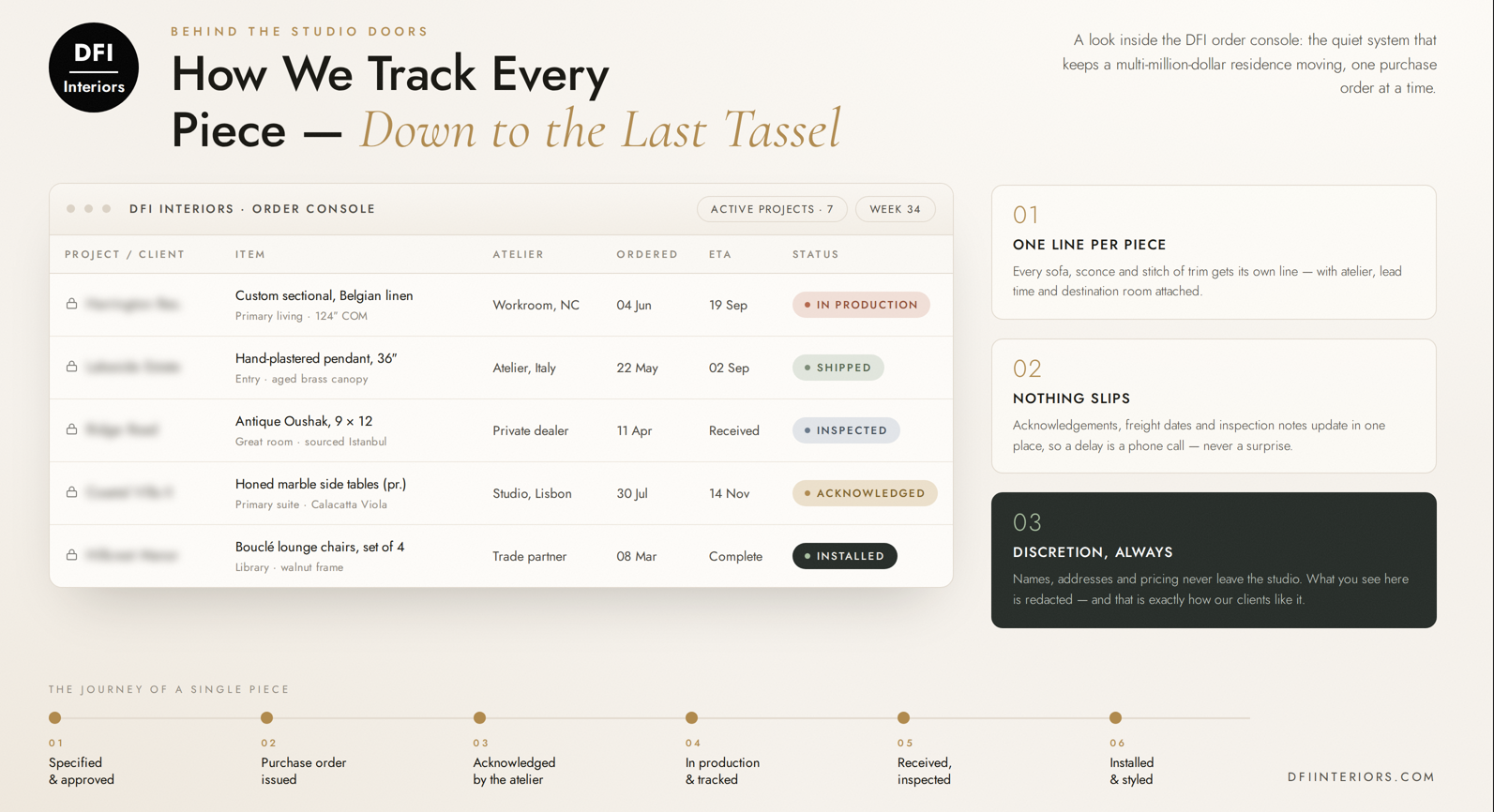
Behind the scenes at DFI Interiors: our procurement process tracks every custom furnishing from approval and ordering through production, receiving, inspection and final installation.
Installations are then scheduled around construction timelines.
The objective is simple: when installation day finally arrives, everything should feel seamless.
Ironically, the smoother the experience is for the client, the more invisible that work becomes.
And that's exactly how it should be.
A Real Newton Interior Design Project: When Beautiful Choices Don’t Work Together
A recent kitchen renovation in Newton illustrates this perfectly.
The homeowners had spent months collecting inspiration images online. Every individual choice was beautiful: the cabinetry, the countertops, the flooring, the lighting.
Viewed separately, each selection could easily have appeared in a design magazine. Together, however, they were competing for attention.
The warmth of the white oak cabinetry conflicted with the cooler tones of the stone. The decorative lighting belonged to an entirely different aesthetic than the architecture. Nothing was technically wrong. But nothing felt cohesive.
Instead of replacing everything, we stepped back and looked at the project as a complete composition. A handful of carefully considered changes brought the entire space into harmony.
The finished kitchen didn't feel successful because every material was extraordinary. It felt successful because every material belonged.
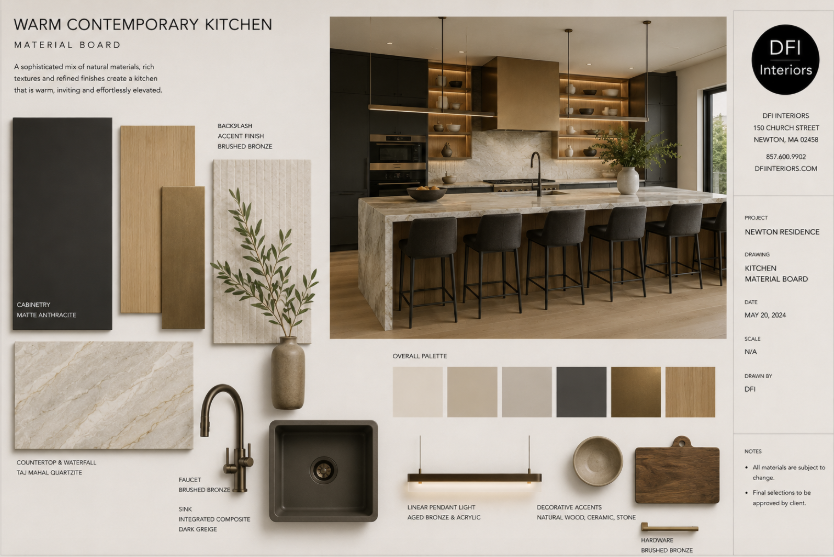
A kitchen material board by DFI Interiors illustrating how cabinetry, stone, lighting, hardware and finishes are considered together before construction begins.
That's often what professional interior design looks like, not necessarily dramatic transformations, but thoughtful refinements that make a home feel as though it was always meant to look that way.
Professional design isn't about recreating someone else's home. A kitchen photographed in California may receive completely different natural light than one in Boston; the proportions, architecture and way the materials read can be entirely different. It's about understanding why a space works and translating those principles into a home that reflects your architecture, your lifestyle and your priorities.
What Does It Really Cost to Furnish and Renovate a Home in Boston?
When homeowners ask how much it costs to furnish a room, they're often imagining the price of the furniture itself: a sofa, a coffee table, perhaps a rug.
But professionally designed interiors aren't created one piece at a time. They're built through layers: lighting, artwork, window treatments, accessories, occasional furniture and, most importantly, the right scale and proportions.
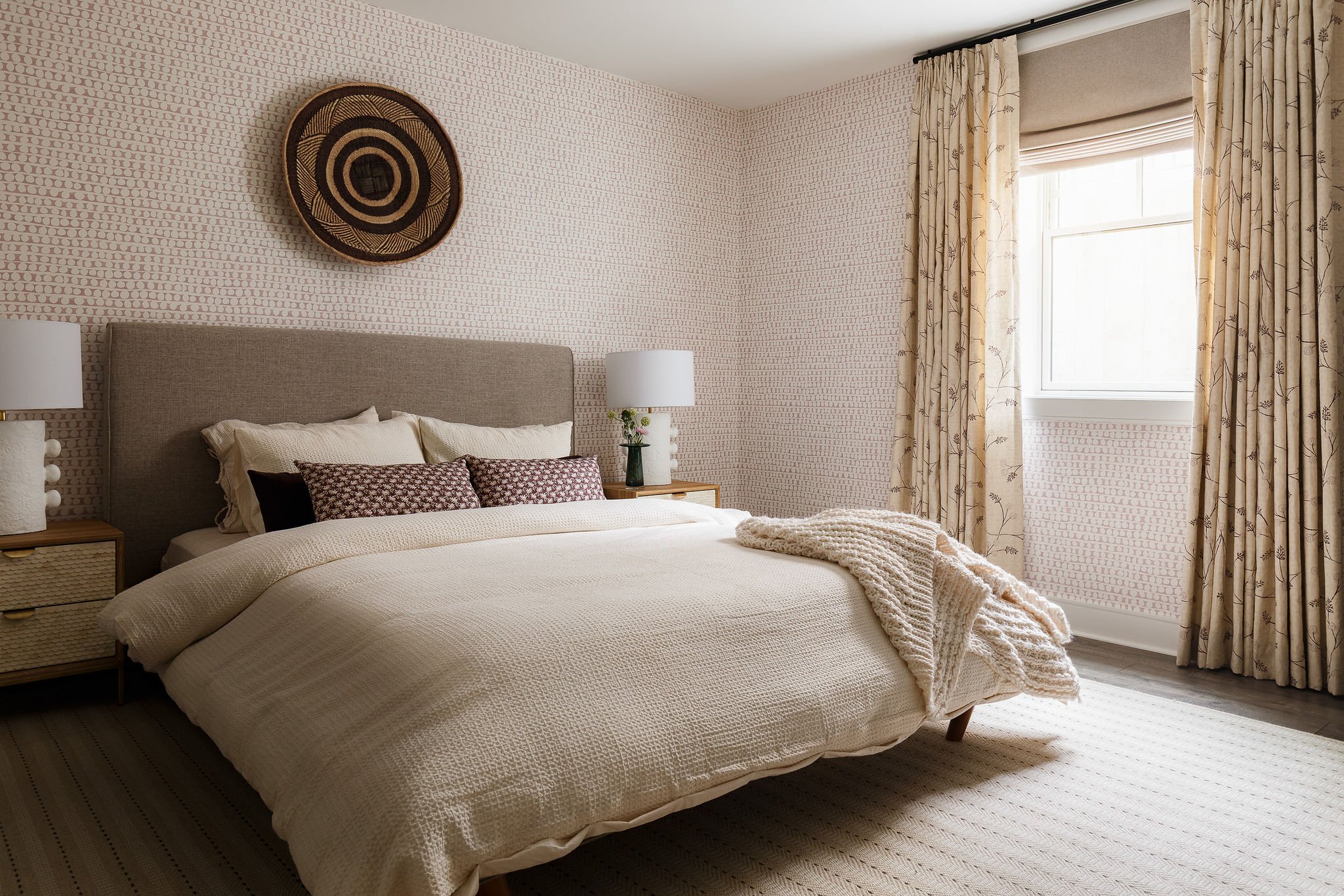
A serene guest bedroom in Newton, Massachusetts, designed by DFI Interiors with layered neutrals, patterned wallcovering and custom window treatments.
That's why furnishing budgets are often higher than people initially expect. It's not necessarily because individual pieces are extravagant. It's because a finished room requires far more than most of us naturally think about.
How Much Does It Cost to Furnish a Living Room in Boston?
A beautifully finished living room is about far more than the sofa. The furniture needs to fit the architecture, the rug needs to properly anchor the seating area, lighting needs to work throughout the day and evening, and artwork, window treatments and accessories provide the layers that make the room feel complete.
That atmosphere isn't created by one purchase. It's the result of many carefully considered decisions.
For the types of full-service projects we work on at DFI Interiors, I typically recommend planning for approximately $45,000 to $100,000+ to fully furnish a living room in Greater Boston, depending on the size of the room, the level of customization and the quality of the furnishings.
A typical living room furnishing budget may include:
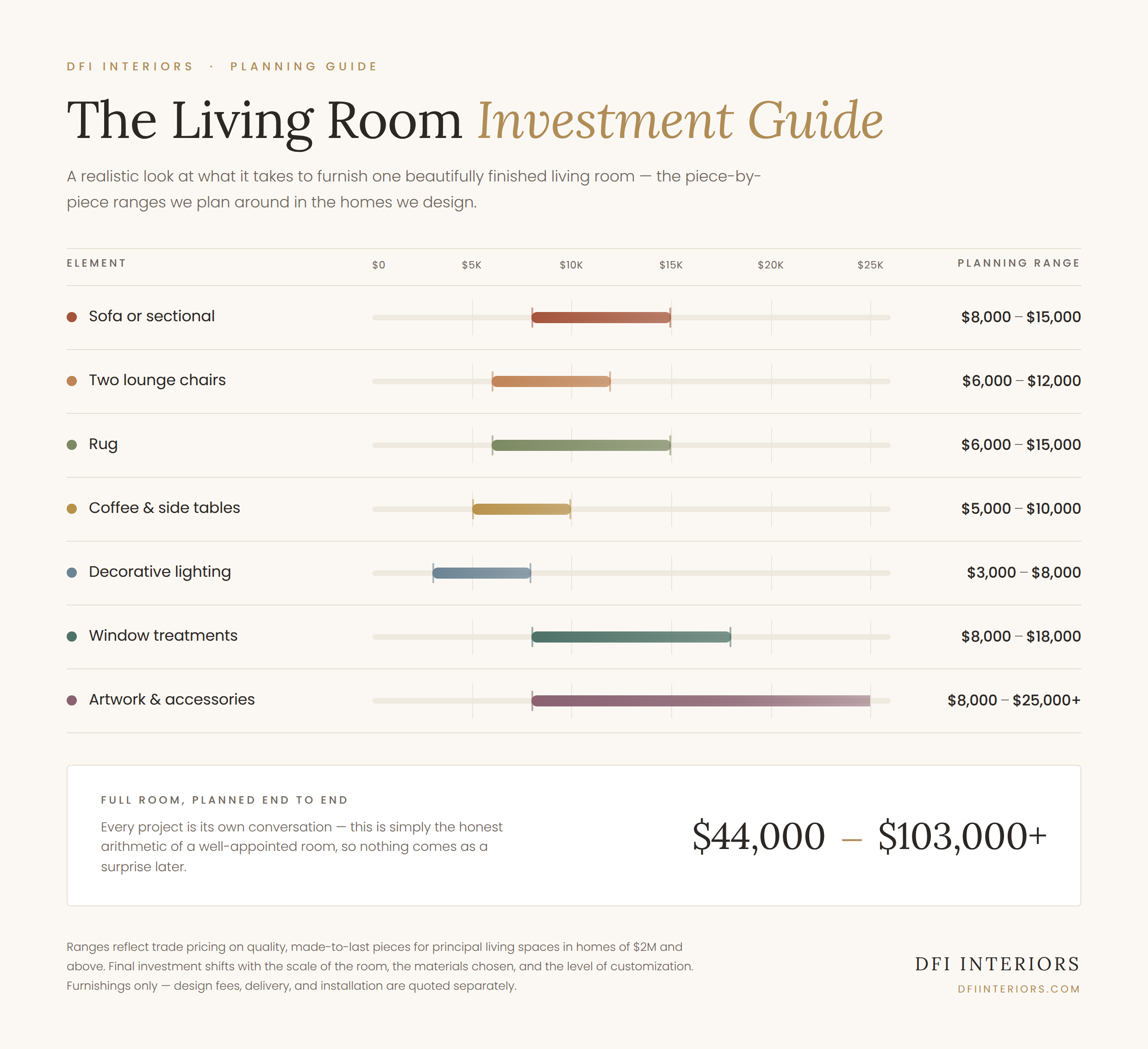
Typical furnishing investment for a professionally designed living room. Actual costs vary based on room size, materials, customization and individual project requirements.
As a general planning guide, individual furnishings may range from $8,000–$15,000 for a sofa or sectional, $6,000–$12,000 for a pair of lounge chairs, $6,000–$15,000 for a rug, and $8,000–$18,000 for custom window treatments. Artwork, lighting, tables and accessories make up the remaining layers of the room.
“The difference between a furnished room and a fully designed room is rarely one spectacular piece. It’s the way every piece works together”
Where Should You Invest Your Interior Design Budget?
One of the biggest surprises for new clients is that I don't recommend spending the same amount in every room. In fact, I often encourage the opposite.
Think about how your family actually lives. Where do you drink your morning coffee? Where does everyone gather at the end of the day? Where do birthdays, holidays and conversations happen?
Those are the spaces that deserve the greatest investment.
Guest bedrooms, by comparison, can often remain beautifully simple. A formal room that's rarely used may not need the same level of investment as the kitchen or family room your family lives in every day.
A home should reflect your life, not an imaginary version of it.
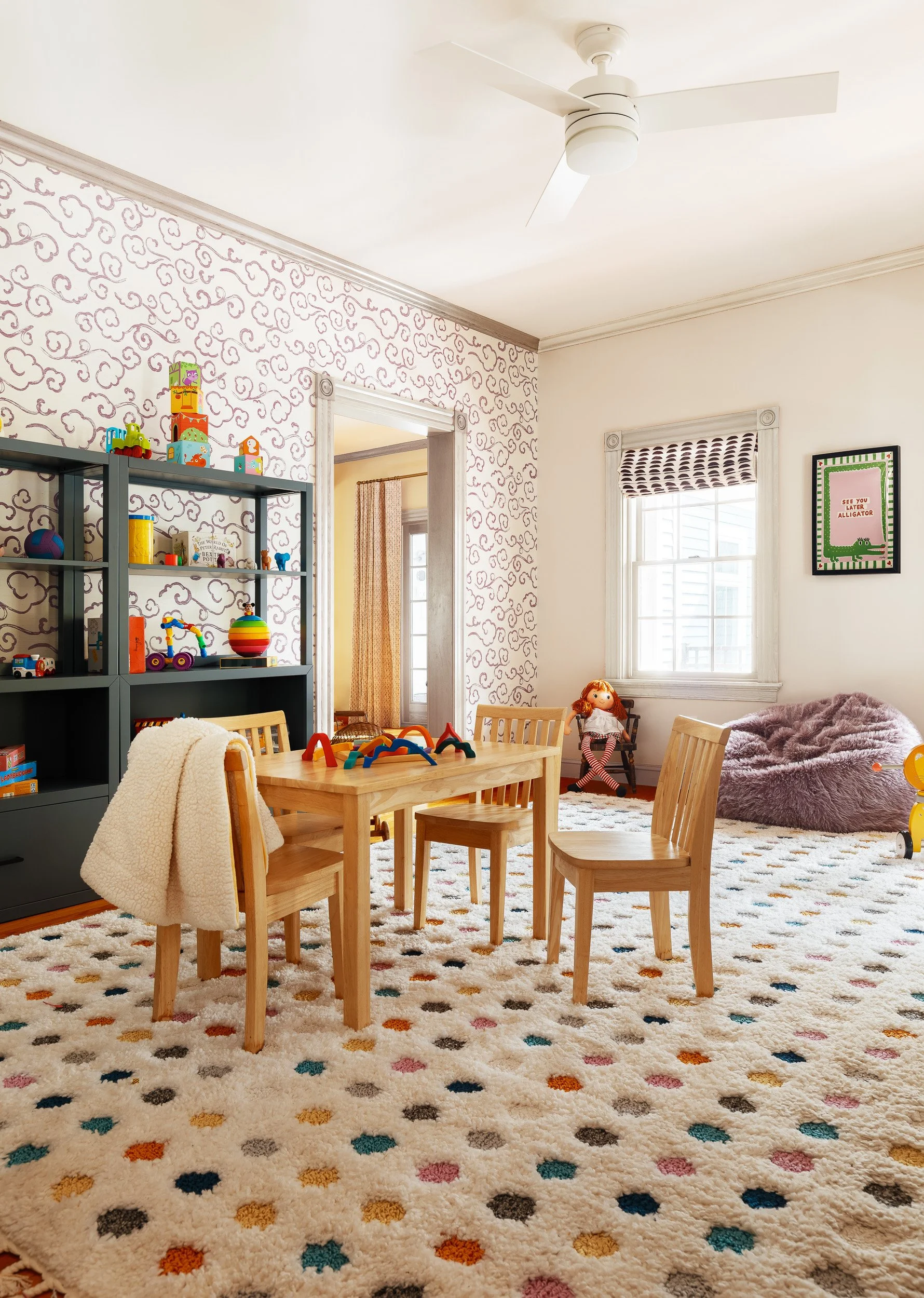
A playful, thoughtfully designed children’s space in Needham, Massachusetts, where pattern, color and practical storage create a room made for everyday family life.
The goal isn't to make every room equally impressive. It's to make every room equally intentional.
A Needham Interior Design Project: Investing Where It Matters Most
Several years ago, we worked with a family furnishing a home in Needham. Like many homeowners, they initially wanted to divide their furnishing budget evenly throughout the house.
But as we walked through the space together, something quickly became obvious:
Nearly all of their daily life happened in three connected spaces—the kitchen, family room and dining area.
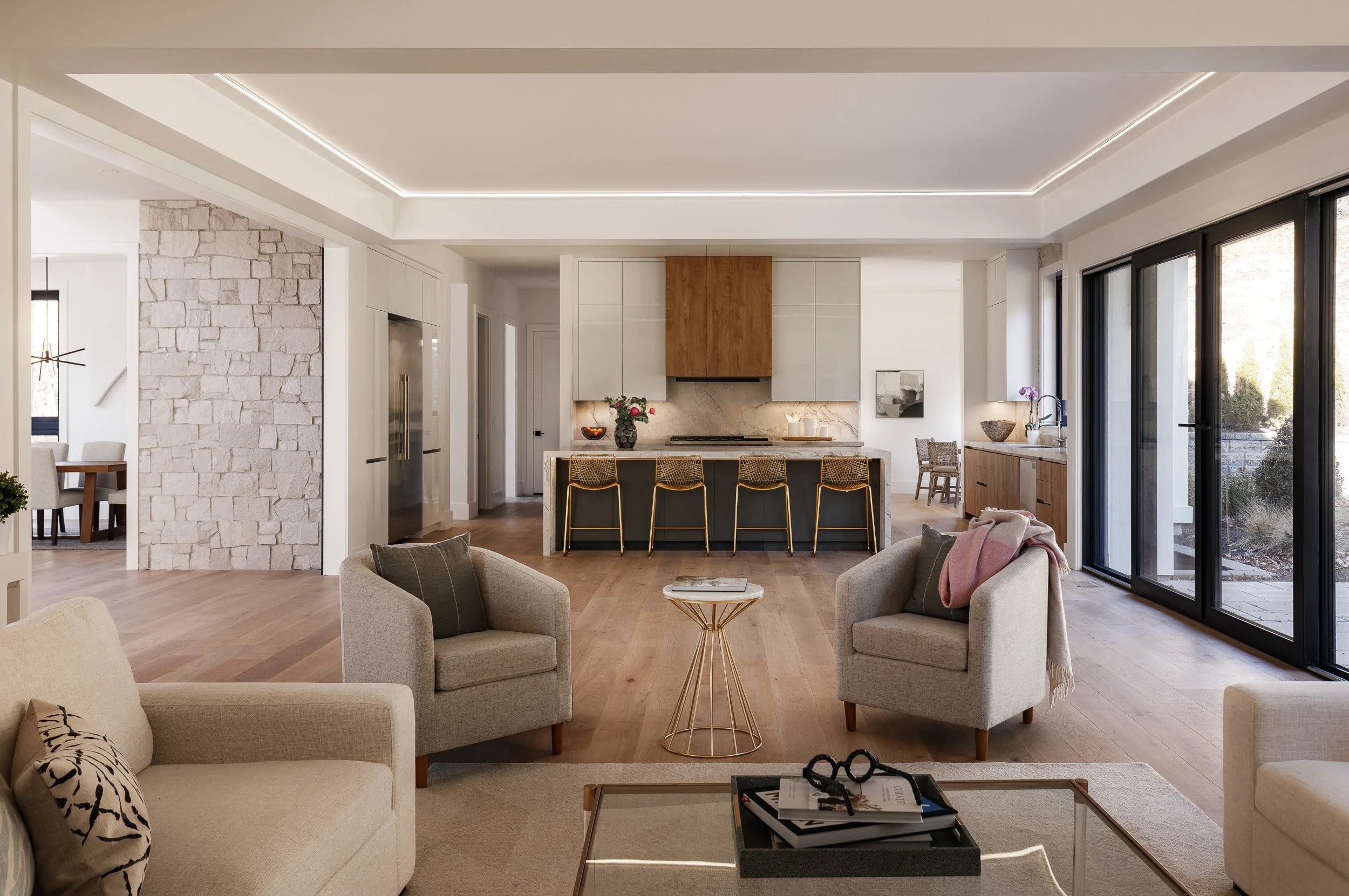
An open kitchen and living space designed by DFI Interiors for a home in Needham, Massachusetts.
Those spaces were visible from almost every angle of the first floor and used from morning until bedtime.
Rather than spreading the investment evenly, we focused the budget on creating exceptional spaces where the family spent the most time.
We selected durable upholstery that could stand up to children and pets, custom window treatments that softened the architecture and controlled natural light, and a generously scaled hand-knotted rug that anchored the entire seating area.
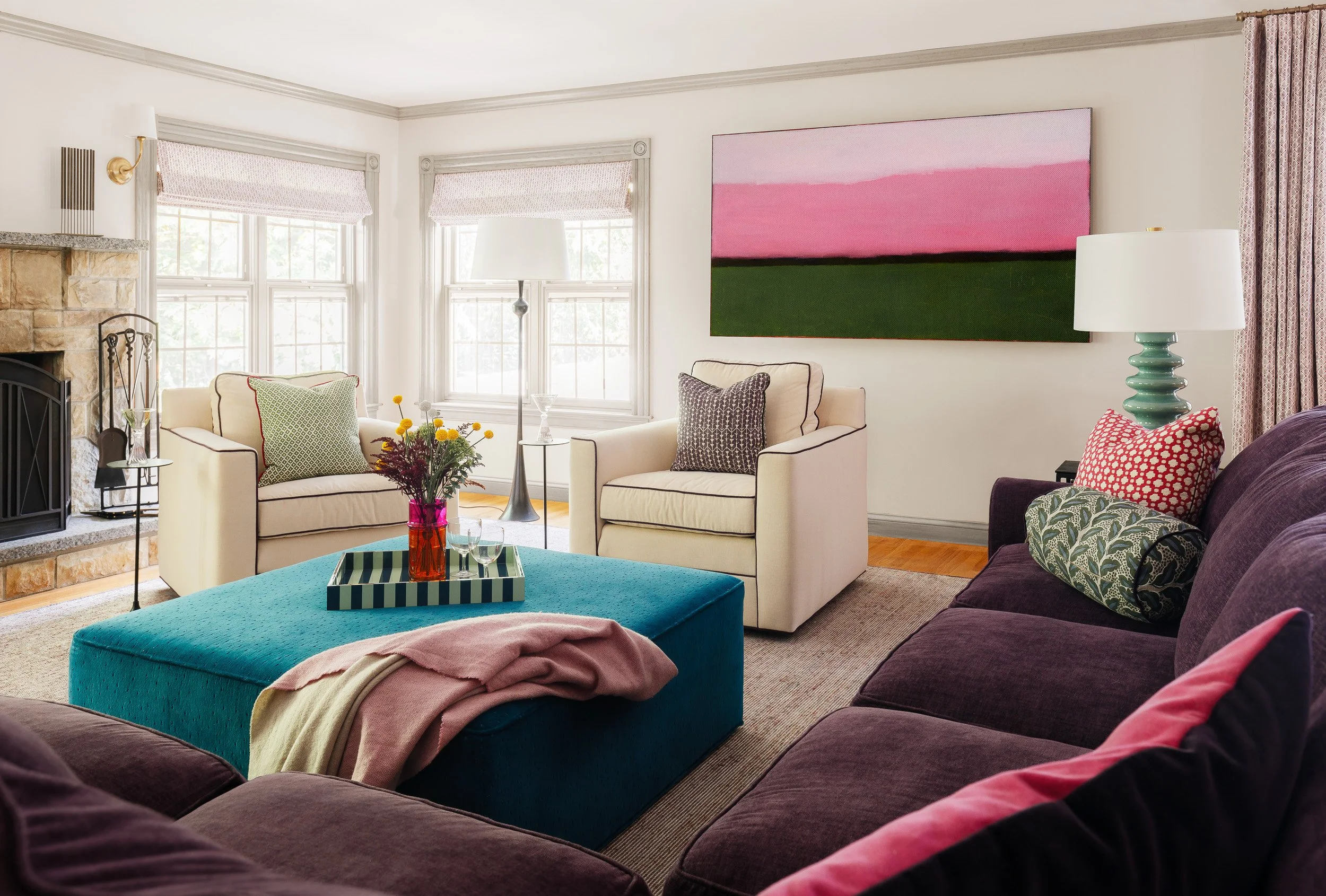
A colorful living room in Needham, Massachusetts, designed by DFI Interiors with layered textiles, custom window treatments and a mix of bold color and pattern.
Meanwhile, secondary spaces remained intentionally understated.
The result wasn't a more expensive home. It was a more thoughtful one.
Even today, visitors rarely comment on the rooms where less money was spent. They notice the spaces where every decision feels connected.
That's the power of thoughtful budgeting: investing more where it will have the greatest impact on the way you actually live.
How Much Does a Kitchen or Bathroom Renovation Cost in Boston?
Furnishings can often be updated over time. Construction is different. Once cabinetry has been installed, plumbing relocated or countertops fabricated, changes become considerably more expensive.
That's why I encourage clients to invest in planning before construction begins.
While every renovation is unique, the following are realistic planning ranges for the types of professionally managed renovation projects we work on throughout Greater Boston.
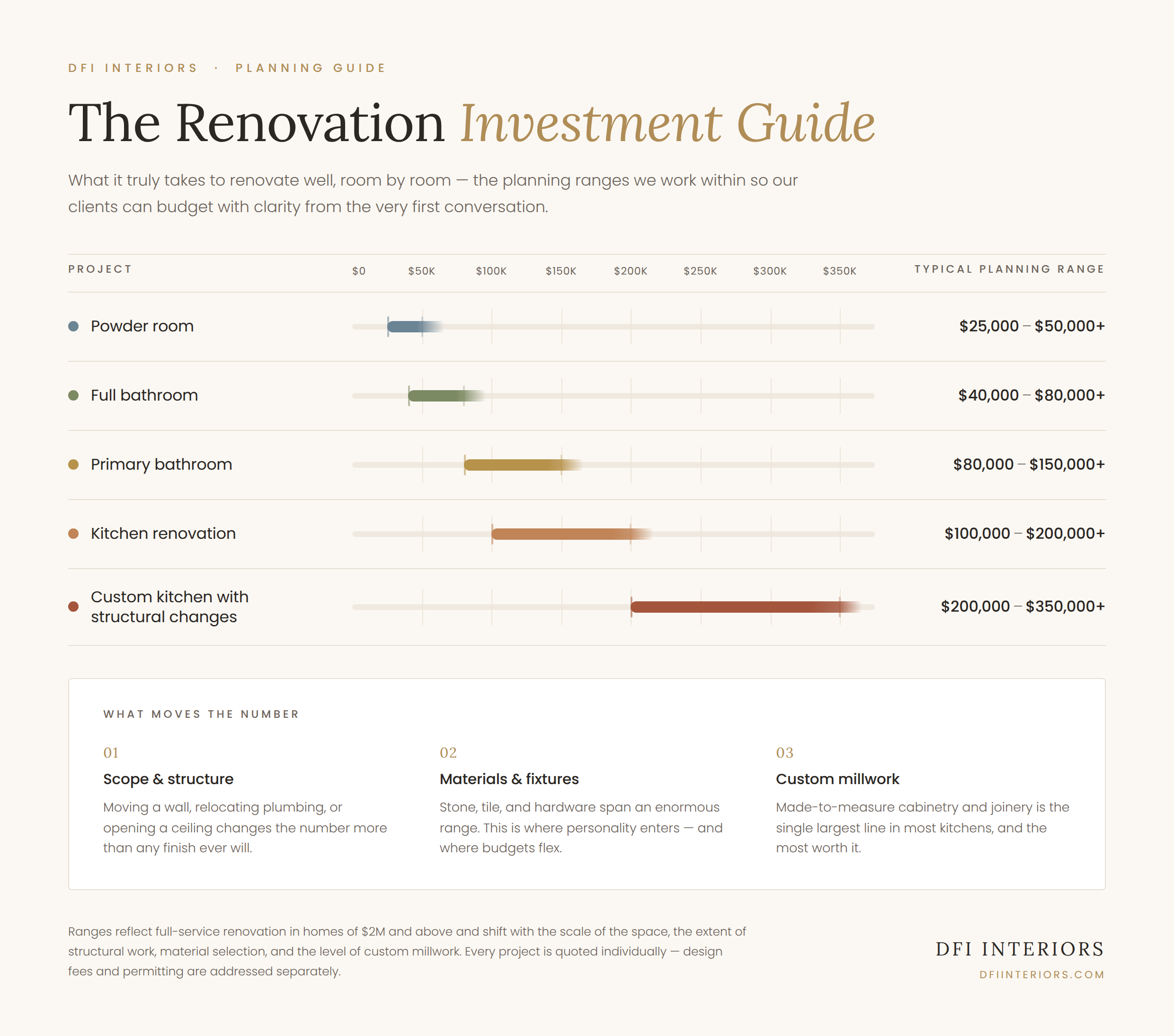
Typical planning ranges for full-service kitchen and bathroom renovations in Greater Boston. Actual costs vary based on scope, materials, structural work and level of customization.
As a general planning guide, a powder room renovation may range from $25,000–$50,000+, while a full bathroom may range from $40,000–$80,000+ and a primary bathroom from $80,000–$150,000+. A kitchen renovation may range from $100,000–$200,000+, while a highly customized kitchen involving structural changes can reach $200,000–$350,000+.
These figures include far more than cabinetry and finishes. They're influenced by demolition, electrical work, plumbing, tile, stone fabrication, custom millwork, permits, labor and the countless decisions required to coordinate them successfully.
Design fees and permitting are addressed separately, and every project is quoted individually based on its scope.
The Budget Conversation I Have With Every Client
One of the first conversations I have with new clients isn't about style. It's about priorities.
Where do you want to invest? Where are you comfortable simplifying? What pieces will you still love twenty years from now?
I don't believe every project requires the most expensive solution. Good budgeting is about understanding where quality will make the greatest difference and where it won't.
Sometimes the smartest decision is investing in exceptional upholstery while choosing simpler side tables. Sometimes it's selecting a spectacular hand-knotted rug and allowing artwork to evolve over time. And sometimes it's preserving existing furniture because it has meaning even if replacing it would have been easier.
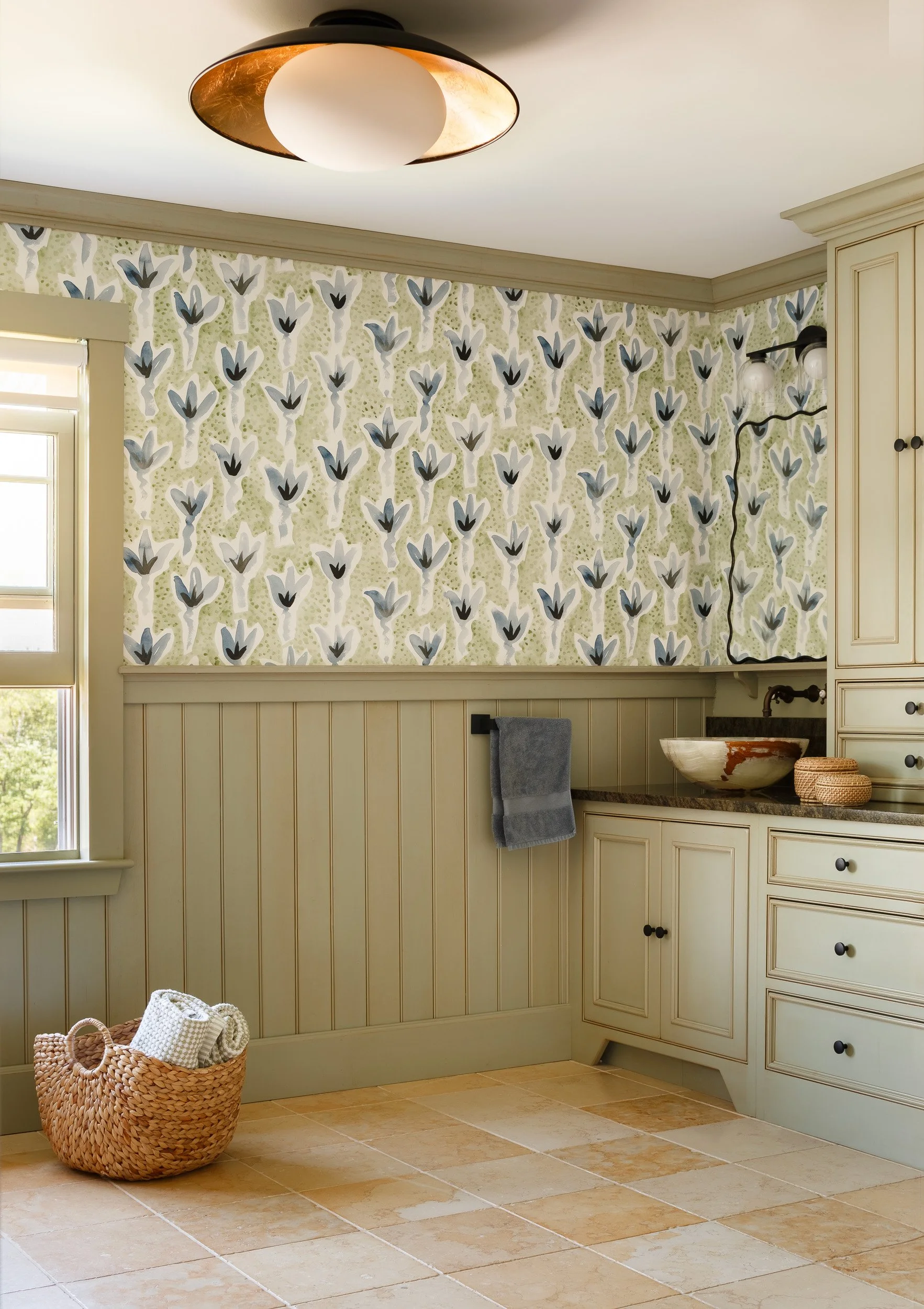
A thoughtfully detailed bathroom in Hamilton, Massachusetts, designed by DFI Interiors with custom cabinetry, patterned wallpaper and layered architectural details.
A thoughtful budget isn't about spending the maximum amount possible. It's about spending intentionally.
“Good budgeting isn’t about spending more. It’s about spending with intention.”
That's one of the most valuable parts of the design process, and it's often the conversation that saves clients the most money in the long run.
By now, you probably have a much clearer idea of what professional interior design costs in Greater Boston. But numbers alone don't answer the question that matters most: Is hiring an interior designer worth it?
Is Hiring an Interior Designer Worth It?
This is probably the question I get asked most often, sometimes directly, sometimes indirectly.
And my answer is always the same:
It depends.
Not every project needs a full-service interior designer. Not every homeowner wants one. And that's perfectly okay.
If you're repainting a few rooms, updating a guest bedroom or replacing a sofa that's reached the end of its life, you may not need a comprehensive design engagement. A consultation, a furniture plan or a second opinion could be all that's required to help you move forward with confidence.
Interior design isn't valuable because every home requires it. It's valuable because some decisions become incredibly expensive once they're made.
The earlier those decisions are made correctly, the greater the value professional guidance can bring.
What Does an Interior Designer Actually Do?
An interior designer does far more than select furniture, fabrics and finishes. Depending on the scope of a project, a designer may be involved in:
Space planning and furniture layouts
Material and finish selections
Furniture and lighting sourcing
Custom cabinetry and millwork
Window treatments
Art selection and placement
Coordination with architects, contractors and trades
Vendor and procurement management
Delivery and installation
Final styling
On a full-service project, these responsibilities aren't separate tasks. They're interconnected parts of one larger plan. A decision about cabinetry can affect lighting; lighting can influence paint and material selections; furniture placement can affect electrical locations long before a sofa ever arrives.
The designer's role is to see those relationships early, make decisions in the right order and keep the entire project moving toward one cohesive result.
The Most Expensive Mistakes Usually Don't Look Like Mistakes
When people imagine renovation mistakes, they tend to think about dramatic problems.
Cabinets installed incorrectly. The wrong flooring delivered. A damaged countertop.
Those situations happen. But in my experience, they aren't what cost homeowners the most. The most expensive mistakes are usually the quiet ones.
The kitchen island that's just slightly too large for comfortable circulation. The dining room chandelier that's perfectly centered on the ceiling, but not over the table. The custom sectional that technically fits the room but blocks the natural flow through the space. The rug that looked generous in the showroom but feels undersized once it's placed beneath the furniture.
None of those decisions are disasters. Most people eventually learn to live with them.
But they're the kind of compromises homeowners notice every single day.
Good design often isn't about creating something dramatic. It's about preventing those small frustrations before they ever become part of daily life.
“The best-designed homes rarely draw attention to themselves. They simply feel comfortable from the moment you walk in.”
The Biggest Budget Mistakes I See Homeowners Make
After working on homes throughout Greater Boston, I've noticed that most people don't overspend because of one bad decision. They overspend because of a series of small ones.
Here are the patterns I see most often.
Buying Before Planning
This is probably the most common mistake I see. A homeowner falls in love with a sofa because it's on sale. A few months later, they purchase two chairs. Eventually, a rug. Then lighting.
Individually, every purchase may be beautiful. But without a plan for the room as a whole, the pieces don't necessarily work together and the room never quite feels finished.
The irony is that homeowners can end up spending far more replacing or adding pieces over time than they would have spent creating a thoughtful plan from the beginning.
A sale isn't a savings if the piece doesn't ultimately work in the room.
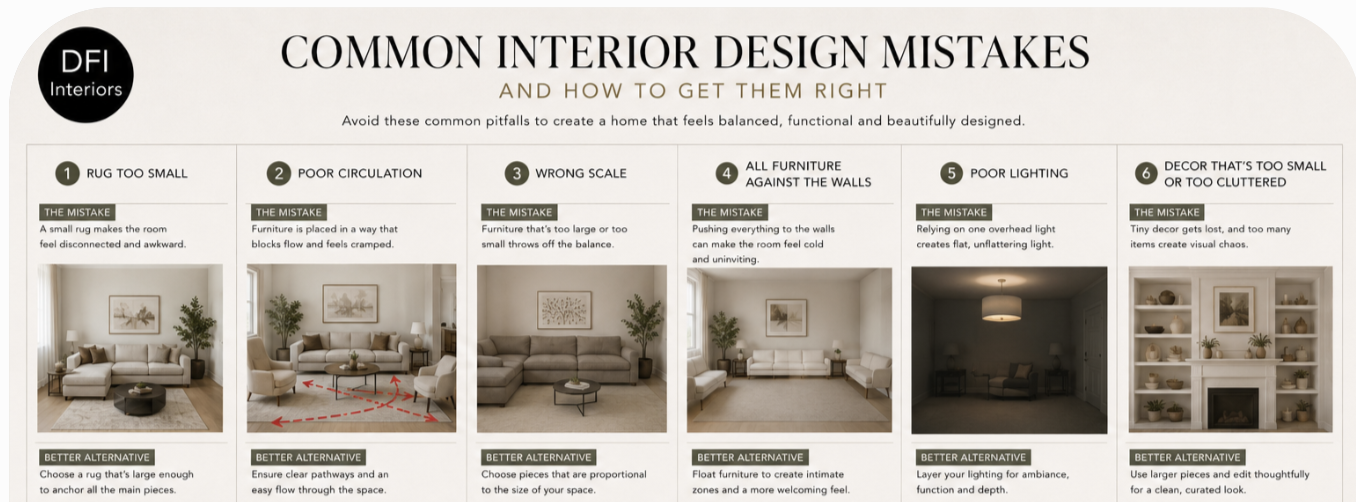
Six common interior design mistakes from undersized rugs and poor furniture scale to circulation and lighting and the thoughtful planning decisions that help prevent them.
Underestimating Scale
If I could fix one mistake in every home I visit, this would probably be it. Rooms often feel “off” for one simple reason: everything is slightly too small.
The rug. The coffee table. The artwork. The light fixture.
People naturally choose furniture based on the size of the piece itself. Designers choose furniture based on the size and proportions of the room. That difference changes everything.
A rug that's too small can make a seating area feel disconnected. A coffee table without enough visual weight can make the furniture around it feel out of proportion. And too many small pieces can actually make a room feel more cluttered rather than more spacious.
Getting scale right isn't about filling a room with large furniture. It's about choosing pieces with the right proportions for the architecture, the layout and one another.
Trying to Finish the Entire House at Once
I completely understand the temptation. You move into a new home and naturally want everything to feel finished as quickly as possible.
But the homes that feel the most personal are rarely completed all at once. They evolve.
Sometimes the best decision is to focus your budget on the spaces you use every day: the living room, kitchen and primary bedroom and allow the rest of the house to develop over time.
Not only does this create a more balanced investment, it often results in a home that feels collected rather than decorated.
Following Inspiration Instead of Your Lifestyle
Pinterest and Instagram are wonderful sources of inspiration. They can also create more design confusion than almost anything else.
A kitchen photographed in California receives completely different natural light than one in Boston. A living room designed for empty nesters won't necessarily work for a family with three young children and two dogs. A beautiful image doesn't necessarily translate into a home that works for the way you live.
Rather than asking clients which images they want to recreate, I spend far more time asking why certain rooms resonate with them.
Is it the warmth? The simplicity? The architecture? The colors?
Those answers tell me far more than any single photograph ever could.
The goal isn't to recreate someone else's home. It's to understand what you love about it and translate that feeling into choices that make sense for your own home.
The best interiors reflect the people who live in them, their routines, priorities and personalities, not simply what's inspiring or trending at the moment.
When Hiring a Designer Makes the Biggest Difference
There are projects where I genuinely believe professional design changes not only the final result, but the entire experience.
Professional design tends to make the biggest difference when you're:
Renovating a kitchen or bathroom
Building a new home or undertaking a significant renovation
Designing custom cabinetry or millwork
Furnishing several rooms at once
Making substantial investments in furniture, lighting or finishes
Coordinating multiple contractors, trades and vendors
These are the projects where thoughtful planning has the greatest impact.
Not because designers magically make projects easier. Construction is rarely easy. But because experienced guidance helps keep hundreds of interconnected decisions moving in the same direction.
Without that roadmap, a project can quickly become a series of isolated choices. With one, those decisions become part of a cohesive home.
The earlier a designer becomes involved, the more opportunities there are to solve problems before they become expensive.
Ideally, that means bringing your designer into the conversation before construction begins, major materials are selected or architectural decisions are finalized. It allows the designer to look at the project as a whole and make sure the decisions being made today support the way the finished home will ultimately function and feel.
What Clients Tell Me After Their Project Is Finished
One conversation happens so often that it's become almost predictable. A few weeks after installation, clients will often say something like:
“I never realized how many decisions there were.”
Or:
“I'm so glad someone was looking at the big picture because I certainly wasn't.”
Very rarely do they talk first about a particular chair or light fixture. Instead, they talk about how the house feels and functions.
How the kitchen works better in the morning. How much easier it is to entertain. How everyone naturally gathers in the family room. How peaceful the living room feels at the end of the day.
That's probably my favorite compliment.
Because beautiful furniture isn't the goal. Helping people enjoy living in their home is.
And if we've done that well, then we've done our job.
Confidence Is the Real Luxury
Earlier in my career, if someone had asked me what clients were really buying, I probably would have talked about beautiful interiors.
Today, my answer is different.
They're buying confidence.
Confidence that someone has considered the details they didn't know to think about. Confidence that expensive decisions have been made thoughtfully. Confidence that the pieces selected today will still feel right years from now. And confidence that the finished home will support the way they actually live.
They're also investing in clarity in having someone look around corners before they have to, anticipate problems before they become expensive and guide hundreds of individual decisions toward one cohesive result.
That's something that's difficult to assign a dollar value to.
But once you've experienced it, it's hard to imagine approaching another major project without it.
The real luxury isn't simply having a beautifully designed home. It's having the peace of mind that comes from knowing it was designed thoughtfully.
Frequently Asked Questions
-
In Greater Boston, experienced residential interior designers typically charge $175–$350 per hour, while principals at established firms may charge $300–$500+ per hour. Larger projects are often structured with fixed or project-based fees rather than hourly billing.
The total investment depends on the scope of the project, level of customization and services required.
-
Greater Boston has higher construction and labor costs, complex logistics and some of the oldest housing stock in the country. Historic homes, challenging site conditions, custom fabrication and the level of craftsmanship expected in many Boston-area projects can all contribute to higher overall costs.
National averages can be a useful reference point, but they rarely reflect the realities of renovating or furnishing a home in Greater Boston.
-
For projects involving expensive, interconnected or difficult-to-reverse decisions, an interior designer can provide significant value.
Designers help homeowners make decisions in the right order, avoid costly mistakes, coordinate the many elements of a project and create a home that functions as beautifully as it looks.
For smaller projects, such as repainting a room or replacing a few pieces of furniture, a consultation or more targeted design service may be all that's needed.
-
Yes. One of a designer's most important roles is helping clients determine where to invest and where to simplify.
A clear plan allows the budget to be allocated intentionally rather than spread evenly or spent reactively as the project progresses.
The goal isn't to spend more. It's to spend intentionally.
-
Yes, ideally. Bringing an interior designer into the project before construction begins allows important decisions about layouts, cabinetry, lighting, electrical locations, plumbing, finishes and furnishings to be considered together.
The earlier a designer is involved, the more opportunities there are to solve problems before they become expensive to change.
-
Absolutely. Interior designers frequently collaborate with architects, builders and contractors. Each professional brings a different area of expertise to the project.
When the team is involved early and working toward the same vision, architectural, construction and interior decisions can be coordinated to create a more cohesive and functional finished home.
About the Author
Dominique Fowler Founder & Principal Designer, DFI Interiors
Dominique Fowler is the founder of DFI Interiors, a boutique interior design studio based in Newton, Massachusetts, serving homeowners throughout Greater Boston. Her work focuses on creating thoughtful, timeless interiors that balance beauty with everyday livability. From full-home renovations and kitchen remodels to custom furnishings and color consultations, Dominique believes every successful project begins with understanding how her clients truly live, not simply how they want their home to look. Known for her refined use of color, layered textures and highly personalized approach, she works closely with homeowners, architects and builders to create homes that feel cohesive, welcoming and uniquely personal. Rather than chasing trends, Dominique designs interiors that will continue to feel relevant, functional and beautiful for years to come.
Planning Your Own Project?
Whether you're renovating a historic home in Newton, furnishing a new build in Wellesley or updating a condominium in Boston, the best projects begin with a clear plan.
Before purchasing furniture, selecting finishes or starting construction, take the time to understand your priorities, establish a realistic budget and develop a cohesive vision for your home. Those early decisions almost always influence the success of everything that follows.
If you're looking for guidance specific to your project, I'd be happy to help. Every project at DFI Interiors begins with a conversation focused on understanding your home, your goals and how you want your space to support your life.
Because in the end, great design isn't about spending more. It's about making every decision count.
